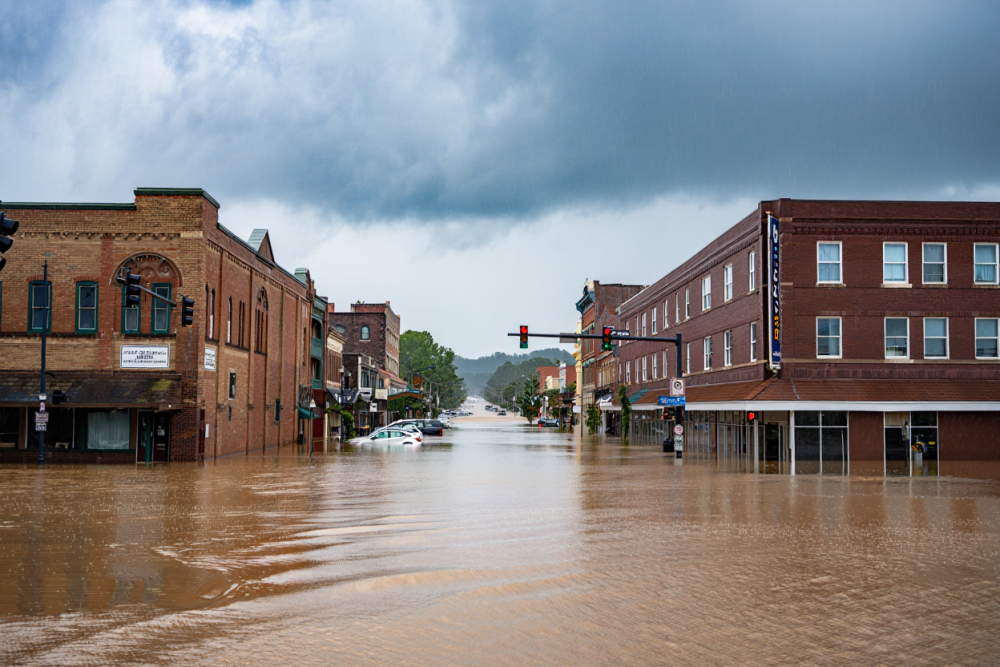
Floods and flood-related disasters are a fact of life for residents of Pennsylvania. In fact, flooding is the Keystone State’s most frequent natural disaster. Some floods start slow while others happen in a flash. It can occur because of a long period of rain or when small streams and rivers overflow.
According to the non-profit research group First Street Foundation, 9.1% of properties in the Quaker State are at major risk from flooding over the next 30 years. What’s more, there’s a 26% chance for a 1-in-100-year flood event to occur at least once over the life of a 30-year mortgage.
A mix of several factors contributes to the state’s vulnerability to flooding. Below are the reasons why floods happen in Pennsylvania.
An Immense Network of Waterways
Did you know that Pennsylvania has 86,000 miles of waterways? It is second only to Alaska’s 365,000 miles of rivers.
“It’s hard to walk around Pennsylvania without tripping over a stream,” observes Penn State extension water resources program team leader Jennifer Fetter.
This means that the state offers plenty of opportunities for fishing, boating, and other water-related activities. But, it also means that more localities are prone to flooding when these waterways overflow.
In fact, many regions in the Commonwealth have a high flood risk. Neighborhoods situated in the following areas are especially vulnerable:
- Along the Susquehanna River in Central Pennsylvania, which is considered to be among the most flood-prone areas in the country,
- Along the Allegheny, Monongahela, and Youghiogheny Rivers in Southwest Pennsylvania,
- Along the Delaware and Schuylkill Rivers in the East, and
- Surrounding parts of the Darby, Perkiomen, Brandywine, and Neshaminy creeks, among others.
In addition, lower elevations, even those far from rivers and streams, are also at risk.
How These Waterways Contribute to Flooding
Three major rivers run through the state, Susquehanna, Delaware, and Ohio, and they come with countless smaller streams and tributaries. While these major rivers might have flood control systems, it is the smaller but faster streams and creeks feeding into them that bear the brunt of the initial and most rapid flooding.
Excessive rainfall or snowmelt can also result in the overflow of creeks, streams, and rivers. This is exacerbated by mountainous, steep, or hilly terrain, which can produce rapid runoff that quickly overwhelms the drainage capacity of local waterways.
What’s worse, bridges, culverts, infrastructure, and other man-made alterations on any part of this network can worsen flooding in specific areas, as they can restrict water flow and result in blockages.
High Tide
In Philadelphia, flooding can occur even on sunny days. This is known as sunny day flooding, high tide flooding, or tidal flooding, which occurs when water levels in coastal or tidal waterways rise due to high tides.
If you’re wondering what high tide has to do with Philadelphia, which is located around 60 miles west of the Atlantic Ocean, here’s the answer: The city is bordered by two tidal rivers, whose water levels and currents are influenced by ocean tides channeled through the Delaware Bay. To the east is the Delaware River, while to the west is the Schuylkill River.
Excessive Rainfall
Heavy or intense precipitation, either over a short or prolonged period (e.g., over several days), can cause flooding, not just in coastal areas but also further inland as the storm moves on shore. In Pennsylvania, excessive rainfall will usually result in floods.
Extreme precipitation is typically caused by slow moving thunderstorms and tropical cyclones (otherwise known as hurricanes, typhoons, or tropical storms). Pennsylvania isn’t located along the Atlantic Ocean, so it is not directly hit by hurricanes or tropical storms and their remnants. However, the indirect effects of these natural phenomena can be significant.
In particular, water from heavy rainfall brought about by tropical cyclones can result in river flooding, flash flooding, and inundation of low-lying areas. For instance, when Hurricane Irene and Tropical Storm Lee hit the country in late August and early September 2011, respectively, they brought more than 20 inches of rainfall, or half a year’s normal precipitation, across portions of eastern Pennsylvania over the span of about 10 days. This isn’t surprising given the fact that strong winds and heavy rain from these natural disasters can extend over 100 miles from the eye of the storm and cause damage.
Dam or Levee Breaks
There are several hundred dams and nearly 200 miles of levees in the Keystone State. The goal of this infrastructure is to protect communities from the threat of floods. However, this flood control system isn’t perfect and can break or fail with little to no warning. When this happens, a sudden surge of water flows downstream, bringing destruction in its wake.
For instance, in 1889, the South Fork Dam broke and caused the now famous Johnstown Flood. Another example is the Austin Dam collapse in 1911. In both occurrences, heavy rains was a primary or contributory factor to the resulting flood.
Snow Melt & Ice Jams
With winter comes snow and with spring comes snowmelt, which results when snow melts into water. Snowpacks melt when the season begins to warm and releases water into rivers and other waterways. So, snowmelt runoff is a natural part of the water cycle.
However, too much of this runoff, too soon can be problematic. This is exemplified by the case of heavy snowfall followed by a sudden thaw and heavy rain in January 1996, which resulted in floods along rivers from New York through Pennsylvania to Virginia. It also resulted in ice jams, or the buildup of ice on waterways, which exacerbated both the flooding and the resulting damages.
Climate Change
According to the Environmental Protection Agency (EPA), climate change has resulted in an increase (or warming) in Pennsylvania’s temperature by more than half a degree (F) in the last century, more frequent heavy rainstorms, and a rise of around 1 inch in the tidal portion of the Delaware River every eight years. But, this is just the beginning.
In the coming decades, climate change is expected to harm ecosystems, disrupt farming, increase some risks to human health, and increase flooding. For instance, heavier storms and extraordinarily high river flows are expected to worsen flooding along the Susquehanna River and its smaller tributaries.